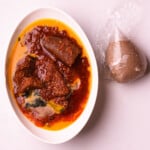
Abula
Discover the rich flavors of Nigerian Abula, a comforting dish consisting of amala, ewedu, gbegiri, and spicy obe ata. Serve as a hearty, traditional dinner.
Servings: 4 people
Calories: 331kcal
Equipment
- Pot
- Blender
Ingredients
Abula
Amala
- 2 cups Yam Flour sifted
- 4 cups of Water
- ½ cup of extra hot water
Ewedu
- 1 cup of fresh ewedu leaves
- 1 tablespoon Locust bean/iru
- 2 tablespoons Ground crayfish
- 1 cube Knorr cube
- Salt to taste
Gbegiri
- 2 cups Black eyed or Brown Beans
- ¼ cup Palm Oil
- 1 Tablespoon Crayfish Powder
- 1 Tablespoon Locust Beans Iru
- 2 Tablespoons Ground Dried pepper Atagungun
- 1 Knorr Cube
- Salt to Taste
Instructions
Amala
- Bring water to a boil in a pot or kettle, then pour four cups of boiling water into the pot.
- Add yam flour, reduce the heat, and then gradually add it to the pot while stirring quickly until it thickens and is thoroughly mixed.
- Pour in the reserved cup of water, cover the pot, and let it simmer for 1–2 minutes.
- Finally, stir vigorously until the amala is smooth, fluffy and lump-free.
Ewedu
- Remove the leaves from the stalk.
- Wash the leaves 3 times to remove dirt.
- Add the leaves to a blender and blend with one tablespoon of water or more.
- Pour the mixture into a pot. Add the iru, ground crayfish, Maggi and salt to taste. Cook for 7-12 minutes mixing from time to time.
Gbegiri
- Boil peeled beans in water to cover for 20-30 minutes or until they are tender. You can use a stovetop pot or an electric pressure cooker.
- Let the beans cool, then add them to the blender. Blend it until it forms a smooth purée.
- Strain the mixture through a sieve to remove any lumps into a large, smooth bowl. Set aside the silky smooth beans.
- Heat palm oil in a large pan for 2-3 minutes.
- Pour in the bean purée. Add some water to loosen the consistency if it is too thick.
- Add ground crayfish, iru, stock cube, dried pepper, and salt to taste. Stir and cook for 5 minutes on low to medium heat.
- Simmer for an additional 3 minutes.
- Finally, enjoy this vibrant abula and serve with gbegiri, amala, ewedu and obe ata.
Notes
- Sieve: When preparing gbegiri, it's essential to sieve the cooked beans to eliminate lumps and achieve a silky, smooth consistency.
- Blend: For the best texture, blend the beans thoroughly until completely smooth. This step is crucial for creating the rich, velvety quality that defines gbegiri.
- Obe Ata: Gbegiri is traditionally served with a hearty Nigerian tomato stew known as obe ata, which is loaded with assorted meats such as chicken, ponmo (cow skin), shaki (tripe), and beef.
Nutrition
Serving: 301g | Calories: 331kcal | Carbohydrates: 43.3g | Protein: 14.5g | Fat: 11.5g | Saturated Fat: 4.8g | Polyunsaturated Fat: 1.4g | Monounsaturated Fat: 3.7g | Trans Fat: 0.02g | Cholesterol: 8.3mg | Sodium: 565mg | Potassium: 350mg | Fiber: 5.5g | Sugar: 2.5g | Vitamin A: 650IU | Vitamin C: 8mg | Calcium: 75mg | Iron: 2.3mg