
Abula
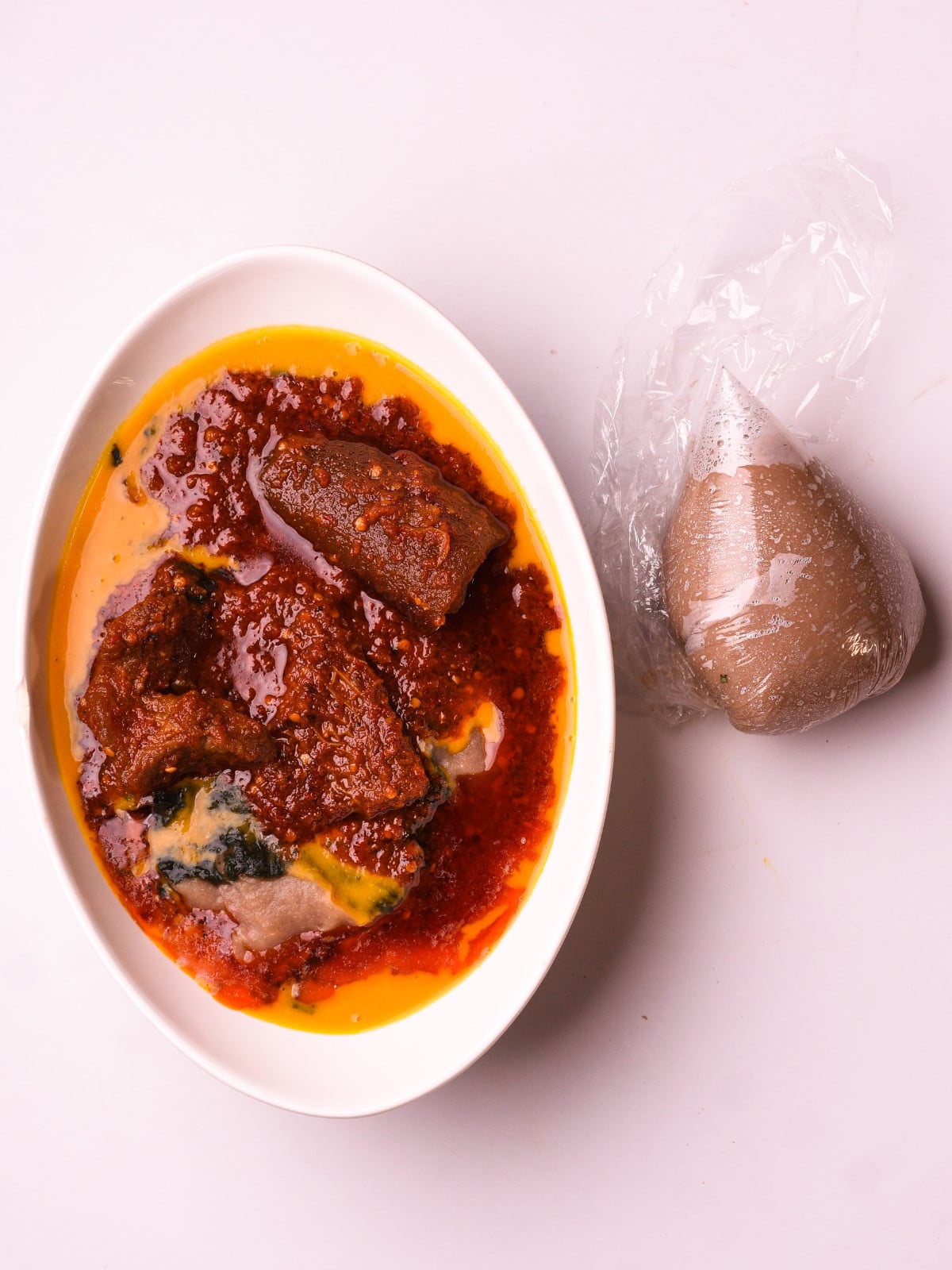
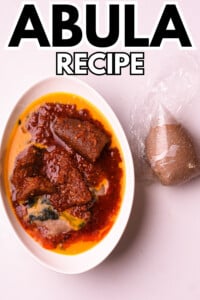
Discover the rich flavors of Nigerian Abula, a comforting dish consisting of amala, ewedu, gbegiri, and spicy obe ata. Serve as a hearty, traditional dinner.
Jump to:
This beloved Nigerian dish has surged in popularity in recent years, thanks to its bold flavors and vibrant presentation. It features amala, a slightly bitter, earthy swallow, paired with a rich, meaty tomato-based stew, a leafy ewedu and a creamy, velvety gbegiri sauce. The combination of textures and tastes bitter, savory, and smooth creates a deeply satisfying experience in every bite. It's a true celebration of Nigerian flavors served as dinner and at buka joints.
If you enjoy Nigerian stews, you may also like this Efo Elegusi Soup, Nigerian Tilapia Tomato Stew, and Nigerian Okra Stew.
Why This Recipe Works
- With these detailed step-by-step photos, you'll feel confident at every stage, even if it's your first time making Abula.
- Rich, savory, and deeply satisfying, this abula dish delivers flavor and warmth.
- This abula recipe is easy to half, double, or triple, depending on how many people you need to feed.
- The colorful layers of amala, ewedu, gbegiri, and stew make this dish as beautiful as it is delicious.
- You can easily customize ingredients or spice levels to match your preferences.
Abula Ingredients
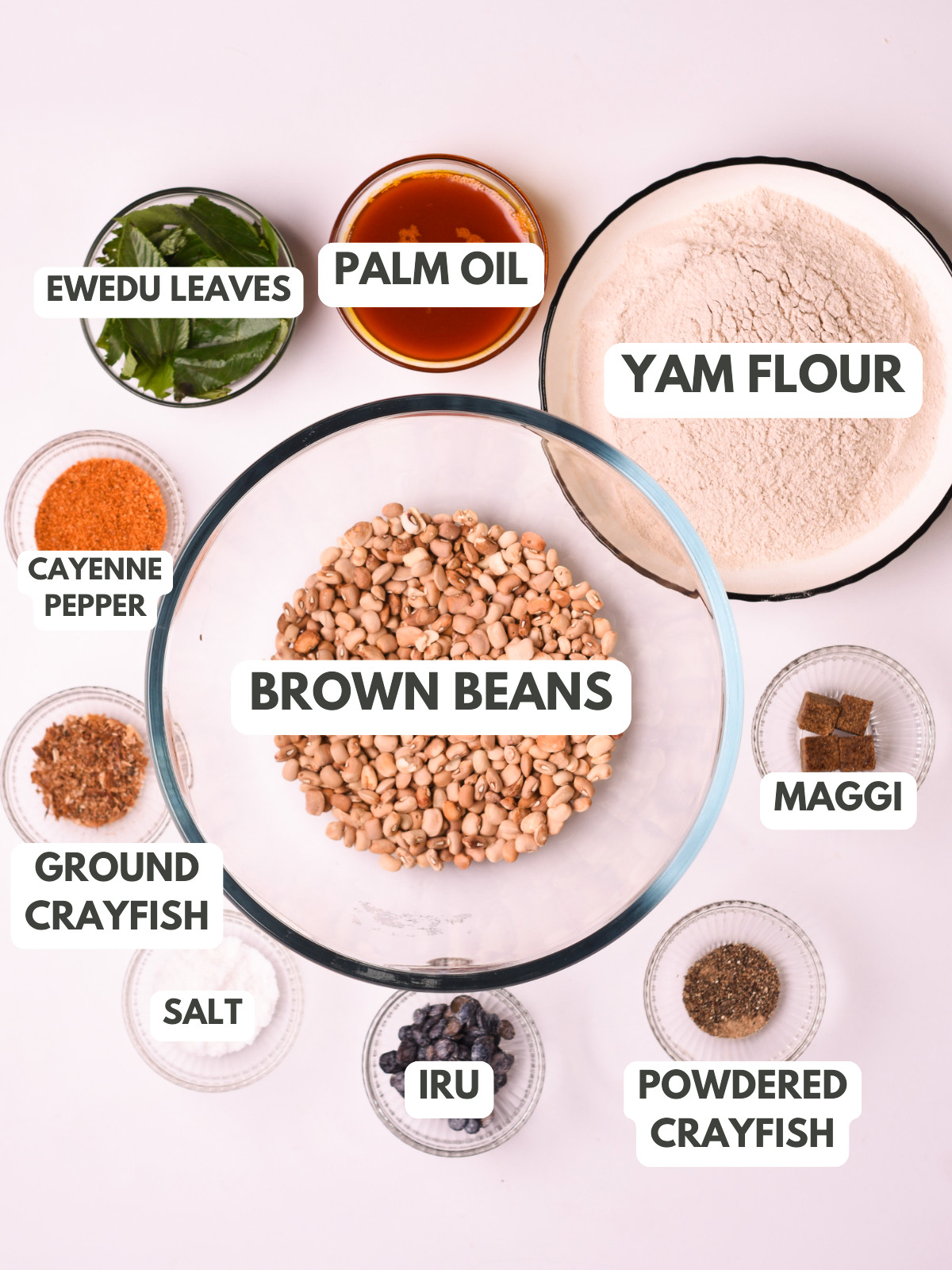
See the recipe card for full information on ingredients and quantities.
- Yam flour: Select your favorite brand of yam flour for this abula recipe.
- Hot water: Ensure that you have hot water ready when preparing the amala.
- Ewedu: Use fresh ewedu leaves for this recipe and ensure that you rinse them thoroughly and remove dirt and the stems before blending.
- Black eyed or Brown Beans: Select good-quality beans for this abula recipe. You can also use peeled beans.
- Palm Oil: Use good-quality palm oil for the best flavor.
- Crayfish Powder: Using crayfish powder for the gbegiri is crucial to ensure a smooth texture.
Tips and Substitutions
- Sieve: When making the gbegiri for abula, it is best to sieve the beans to remove excess lumps and ensure that the gbegiri is silky smooth.
- Blend: It is important to blend the beans until it is as smooth as possible. This will ensure that the sauce has the desired texture.
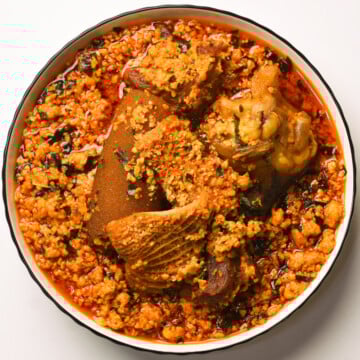
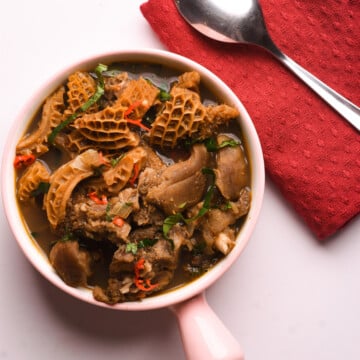
- Obe ata: People usually serve Gbegiri with Nigerian tomato stew, which includes assorted meats like chicken, ponmo, shaki, and beef. You may also enjoy this much-loved Egusi Soup.
How to make Abula
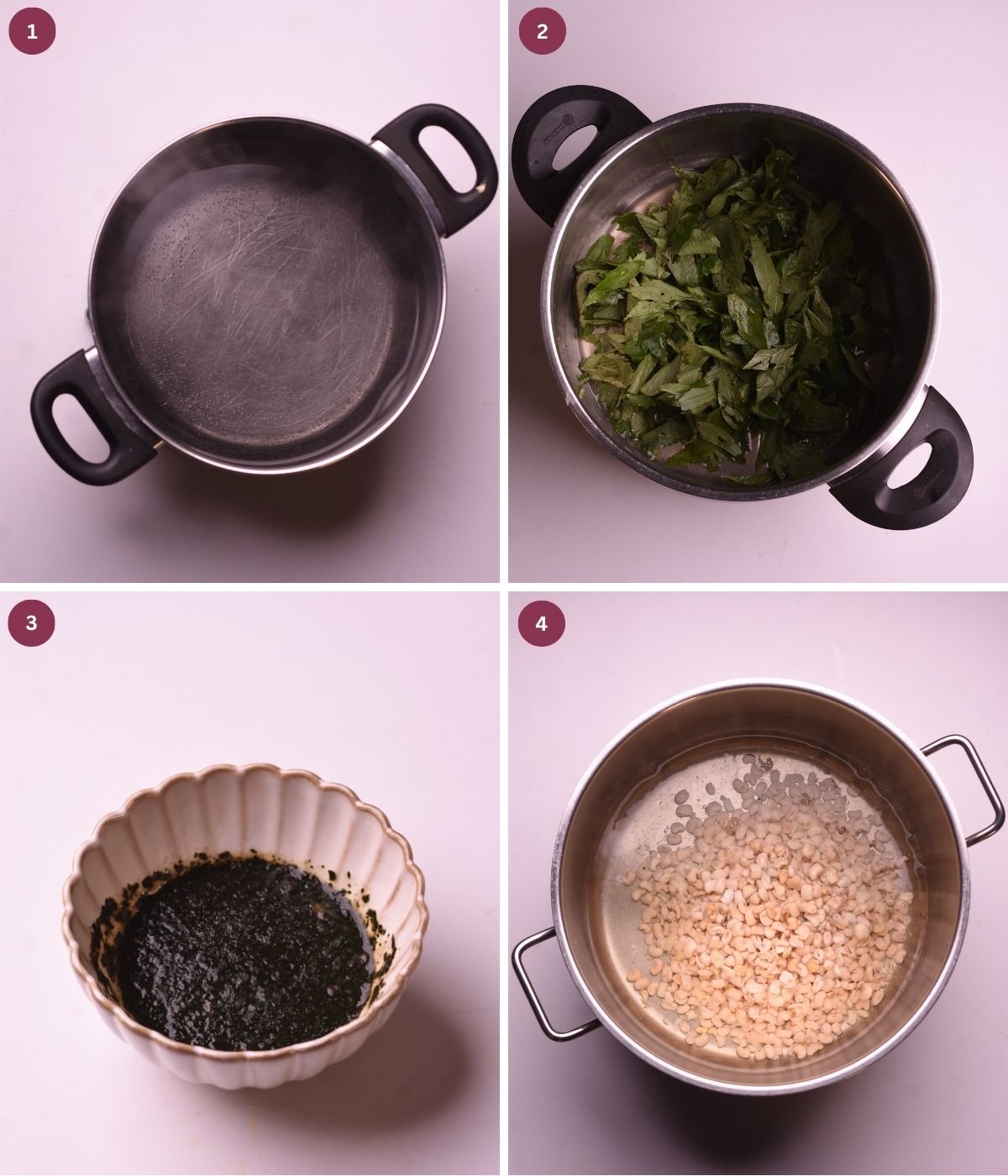
Step 1: First, pluck the leaves off the stems and rinse them about 3 times to remove any sand or dirt.
Step 2: Next, add the clean leaves into a blender with a tiny bit of water (like a tablespoon or two) and blend until smooth and slimy.
Step 3: Then, pour it into a small pot, then add locust beans (iru), a bit of crayfish, seasoning cube (Maggi), and salt to taste. Stir it all together and cook for 7-12 minutes or until it starts to draw.
Step 4: Meanwhile, soak the beans in some water.
Gbegiri
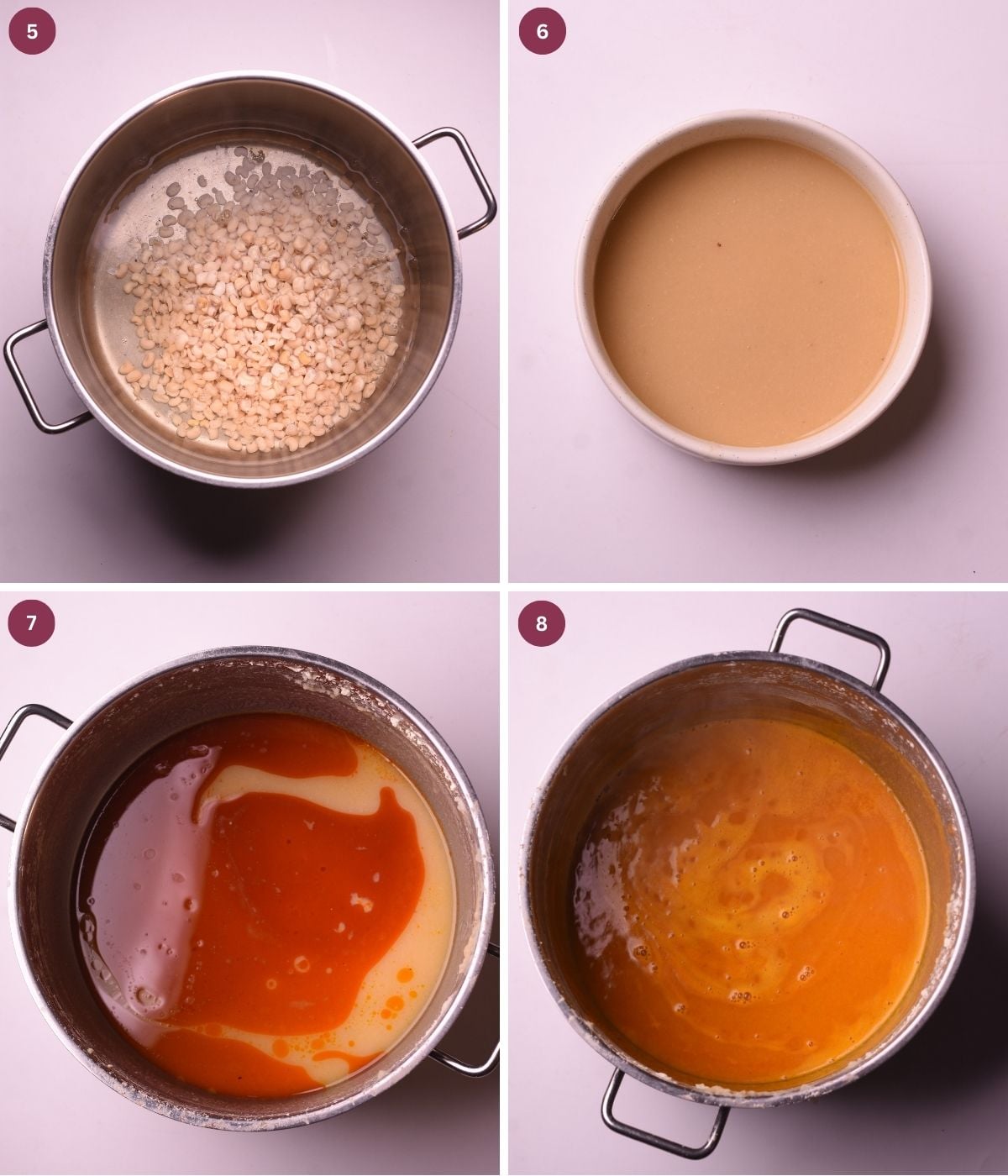
Step 5: Once the beans have softened, start by boiling your peeled brown beans in enough water to cover them. Let them cook for 20-30 minutes, or until they're soft.
Step 6: Once they've cooled down a bit, blend them until super smooth. You can strain the blended beans to make them extra silky.
Step 7: Next, heat some palm oil in a pan for a couple of minutes, then pour in the blended beans.
Step 8: If it's too thick, add a little water to loosen it up. Season with ground crayfish, iru, a stock cube, dried pepper, and salt. Stir it all in and let it cook gently for about 5 minutes. Let it simmer for 3 minutes.
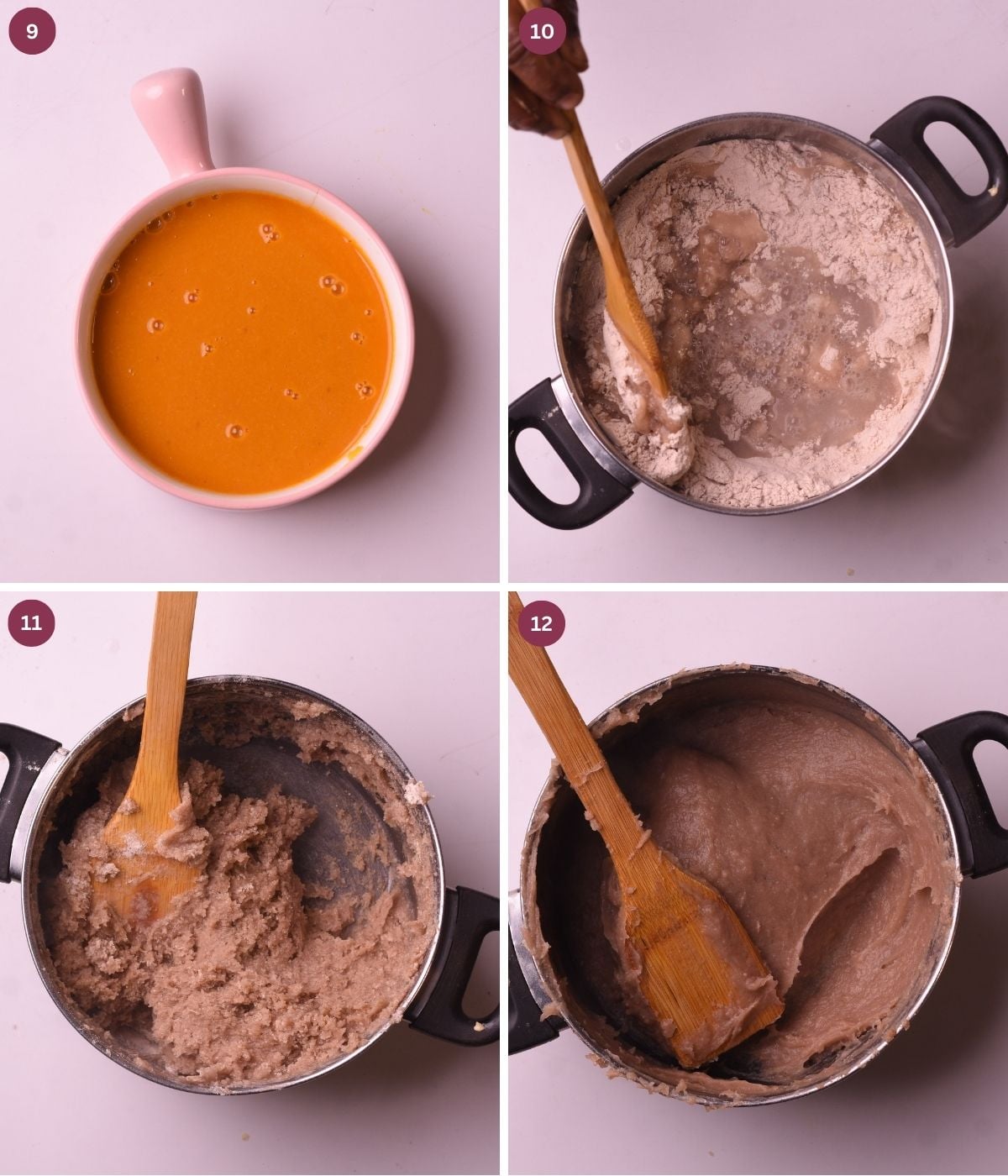
Step 9: Once the gbegiri is done, pour it into a bowl and set aside for serving.
Step 10: Next, boil water and once it's cooking, pour about 4 cups into a pot on the stove. Reduce the heat slightly, then gradually add yam flour while stirring rapidly with a wooden spoon (or turning stick) to prevent lumps.
Step 11: Once it starts to thicken and come together, add a bit more water (like half a cup)
Step 12: Cover it, and let it steam on low heat for 1-2 minutes.
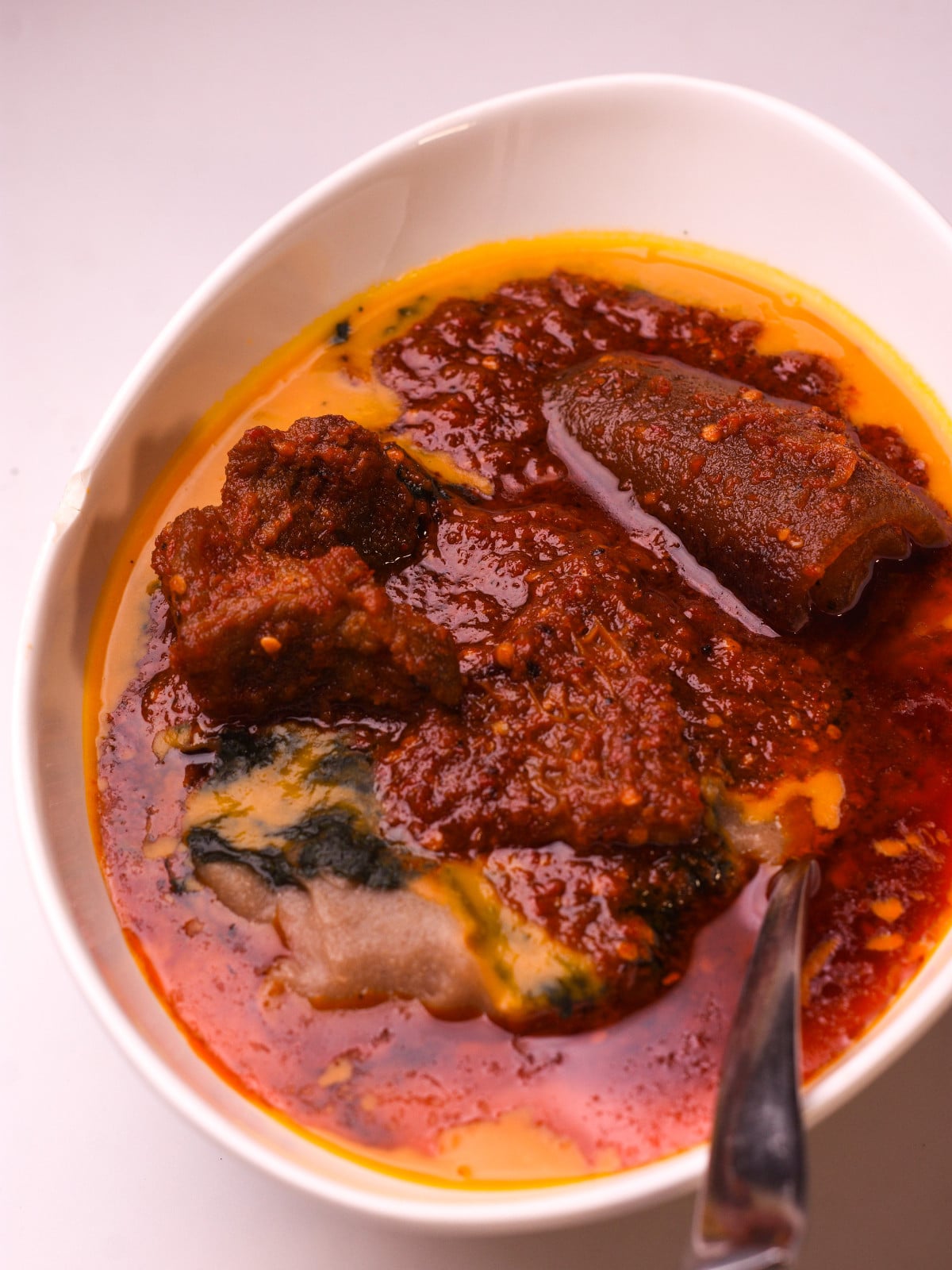
Step 13: Finally, serve and enjoy the rich flavors of Nigerian Abula, and serve with Nigerian Tomato Stew with Assorted Meat. For another spicy Nigerian dish try this tasty Ewa Agoyin.
Recipe FAQs
Abula is a traditional Yoruba dish that is made with amala, obe ata, and ewedu. Amala is a smooth, dark swallow made from yam flour, while obe ata is a rich, spicy tomato-based stew loaded with assorted meats. Ewedu is made from jute leaves and adds a light, leafy texture, and is seasoned with local spices. Abula is known for its bold flavors and striking contrast of colors: dark brown, golden yellow, vibrant red, and earthy green. Abula is a true celebration of Yoruba food.
Abula means a mixture of soups.
Abula can be stored separately. Wrap leftover amala in plastic wrap and refrigerate for up to four days. Place leftover obe ata, ewedu, and gbegiri in separate air-tight containers and refrigerate for up to five days.
More Delicious Nigerian Recipes


Thank you for reading this recipe. Please comment below if you've made it and let me know how it turned out! Follow @simshomekitchen on Instagram, take a photo, tag and hashtag it with @simshomekitchen.
Stay connected and follow me for more recipes on Facebook, Pinterest, Instagram and TikTok for my latest recipes!
Abula
Equipment
- Pot
- Blender
Ingredients
Abula
Amala
- 2 cups Yam Flour sifted
- 4 cups of Water
- ½ cup of extra hot water
Ewedu
- 1 cup of fresh ewedu leaves
- 1 tablespoon Locust bean/iru
- 2 tablespoons Ground crayfish
- 1 cube Knorr cube
- Salt to taste
Gbegiri
- 2 cups Black eyed or Brown Beans
- ¼ cup Palm Oil
- 1 Tablespoon Crayfish Powder
- 1 Tablespoon Locust Beans Iru
- 2 Tablespoons Ground Dried pepper Atagungun
- 1 Knorr Cube
- Salt to Taste
Instructions
Amala
- Bring water to a boil in a pot or kettle, then pour four cups of boiling water into the pot.
- Add yam flour, reduce the heat, and then gradually add it to the pot while stirring quickly until it thickens and is thoroughly mixed.
- Pour in the reserved cup of water, cover the pot, and let it simmer for 1-2 minutes.
- Finally, stir vigorously until the amala is smooth, fluffy and lump-free.
Ewedu
- Remove the leaves from the stalk.
- Wash the leaves 3 times to remove dirt.
- Add the leaves to a blender and blend with one tablespoon of water or more.
- Pour the mixture into a pot. Add the iru, ground crayfish, Maggi and salt to taste. Cook for 7-12 minutes mixing from time to time.
Gbegiri
- Boil peeled beans in water to cover for 20-30 minutes or until they are tender. You can use a stovetop pot or an electric pressure cooker.
- Let the beans cool, then add them to the blender. Blend it until it forms a smooth purée.
- Strain the mixture through a sieve to remove any lumps into a large, smooth bowl. Set aside the silky smooth beans.
- Heat palm oil in a large pan for 2-3 minutes.
- Pour in the bean purée. Add some water to loosen the consistency if it is too thick.
- Add ground crayfish, iru, stock cube, dried pepper, and salt to taste. Stir and cook for 5 minutes on low to medium heat.
- Simmer for an additional 3 minutes.
- Finally, enjoy this vibrant abula and serve with gbegiri, amala, ewedu and obe ata.
Notes
- Sieve: When preparing gbegiri, it's essential to sieve the cooked beans to eliminate lumps and achieve a silky, smooth consistency.
- Blend: For the best texture, blend the beans thoroughly until completely smooth. This step is crucial for creating the rich, velvety quality that defines gbegiri.
- Obe Ata: Gbegiri is traditionally served with a hearty Nigerian tomato stew known as obe ata, which is loaded with assorted meats such as chicken, ponmo (cow skin), shaki (tripe), and beef.


This looks nice.